











Skip to content

Cart

Your cart is empty

First Trimester Support

Mama's Morning Ease Tincture

herbal tincture for morning sickness and first trimester support

Sale price$32.00

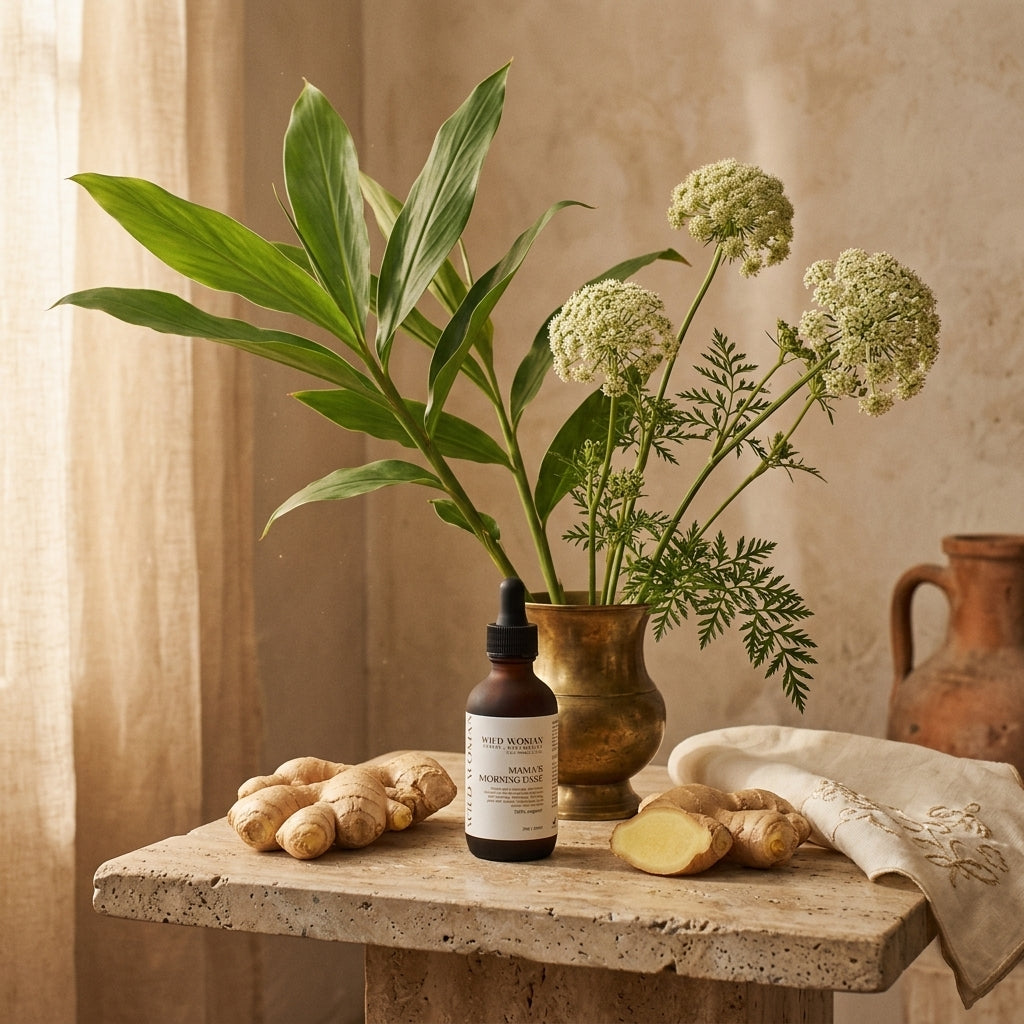
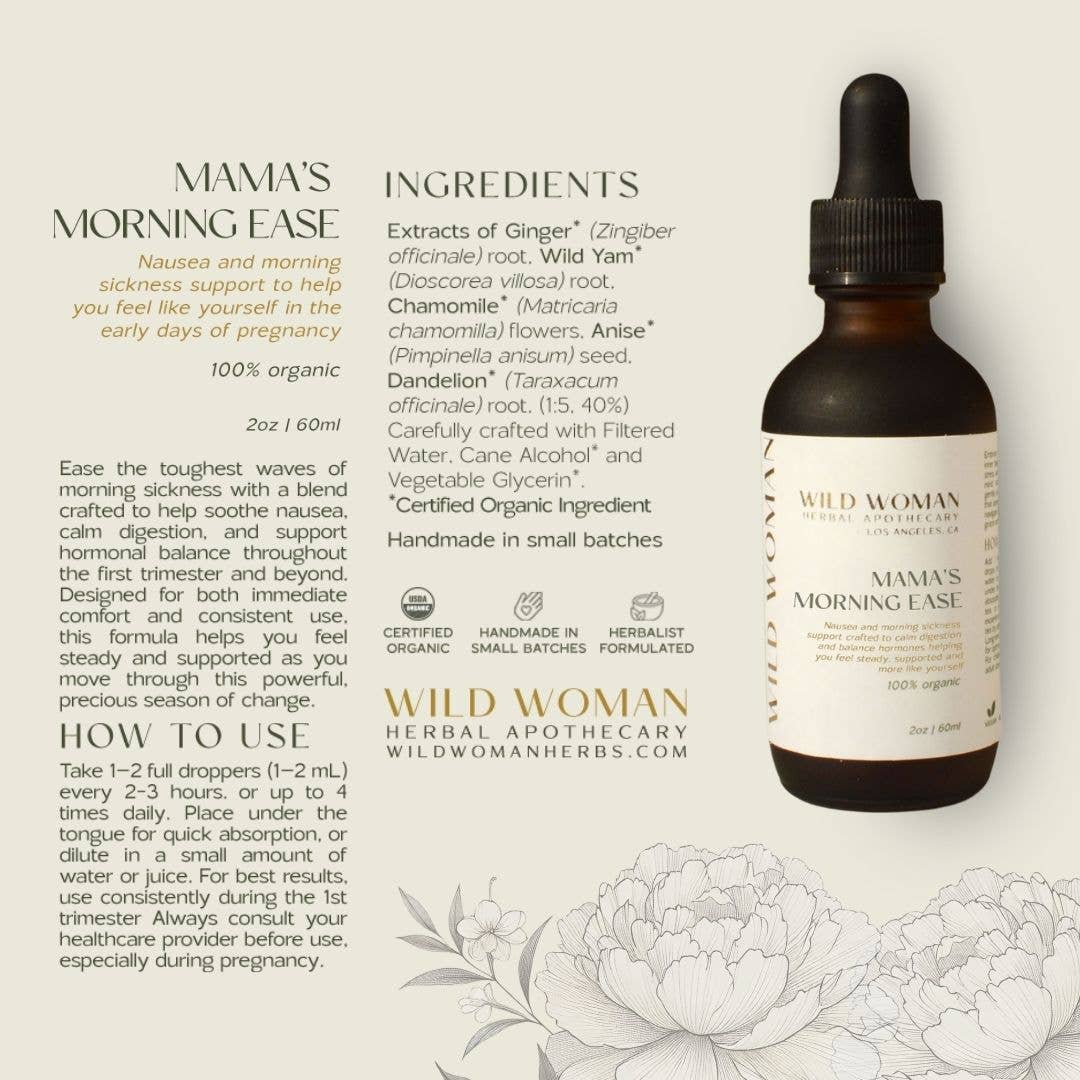
This herbal tincture for morning sickness was made for the weeks when the body is doing something enormous and asking for very little in return. Ginger Root (Zingiber officinale), Chamomile Flower (Matricaria chamomilla), and Anise Seed (Pimpinella anisum) come together in a gentle formula rooted in the traditions women have used for centuries to support digestive ease and calm during early pregnancy. It does not fight the body's process, it steadies it.

warming · gently spiced · soft anise · morning stillness · settling

Mama's Morning Ease Tincture
Mama's Morning Ease Tincture Sale price$32.00

Mama's Morning Ease

PRODUCT DETAILS

The Plants

Ginger has traveled through every recorded tradition of women's herbalism, from the Ayurvedic kitchen to the Chinese apothecary to the midwife's garden in the American South. It is one of the most consistently documented warming herbs in the world's plant medicine traditions, used across cultures to support digestive ease in the early weeks of pregnancy. I chose it as the anchor of this formula not because it is the obvious choice, but because it is the right one. The plant is direct. It does not soften what it does. It warms, it moves, it settles.

Chamomile (Matricaria chamomilla) is one of the most humble plants I know, and one of the most quietly capable. It has been given to anxious stomachs and overwhelmed nervous systems for as long as herbalists have been writing things down. In this formula, it is doing two things at once: calming the digestive system and calming the woman holding it. Those two things are not as separate as we have been taught to believe.

Anise Seed (Pimpinella anisum) is the plant in this formula that most people don't expect. It is ancient medicine, used in traditional Mediterranean and Middle Eastern herbalism for centuries to support digestion and ease the stomach when it is full of air and sensitivity. The warm, faintly licorice character it brings to the formula is part of its medicine too. The body recognizes that flavor as something nourishing. That recognition matters.

Wild Yam Root (Dioscorea villosa) and Dandelion Root (Taraxacum officinale) round out what Ginger, Chamomile, and Anise begin, supporting the digestive system's capacity for steadiness and metabolic ease as the body adjusts to the rapid changes of early pregnancy. This is a formula built for the waves, not the absence of them. It asks for consistency. It rewards patience.

Tasting Notes

Tasting Notes

Warming · gently spiced · soft anise · faintly sweet · earthy finish

Ritual Moment

Ritual Moment

Morning · before rising

Season of Life

Season of Life

The first trimester

Energetics

Energetics

Warming · steadying

Tasting Notes

Tasting Notes

Warming · gently spiced · soft anise · faintly sweet · earthy finish

Ritual Moment

Ritual Moment

Morning · before rising

Season of Life

Season of Life

The first trimester

Energetics

Energetics

Warming · steadying

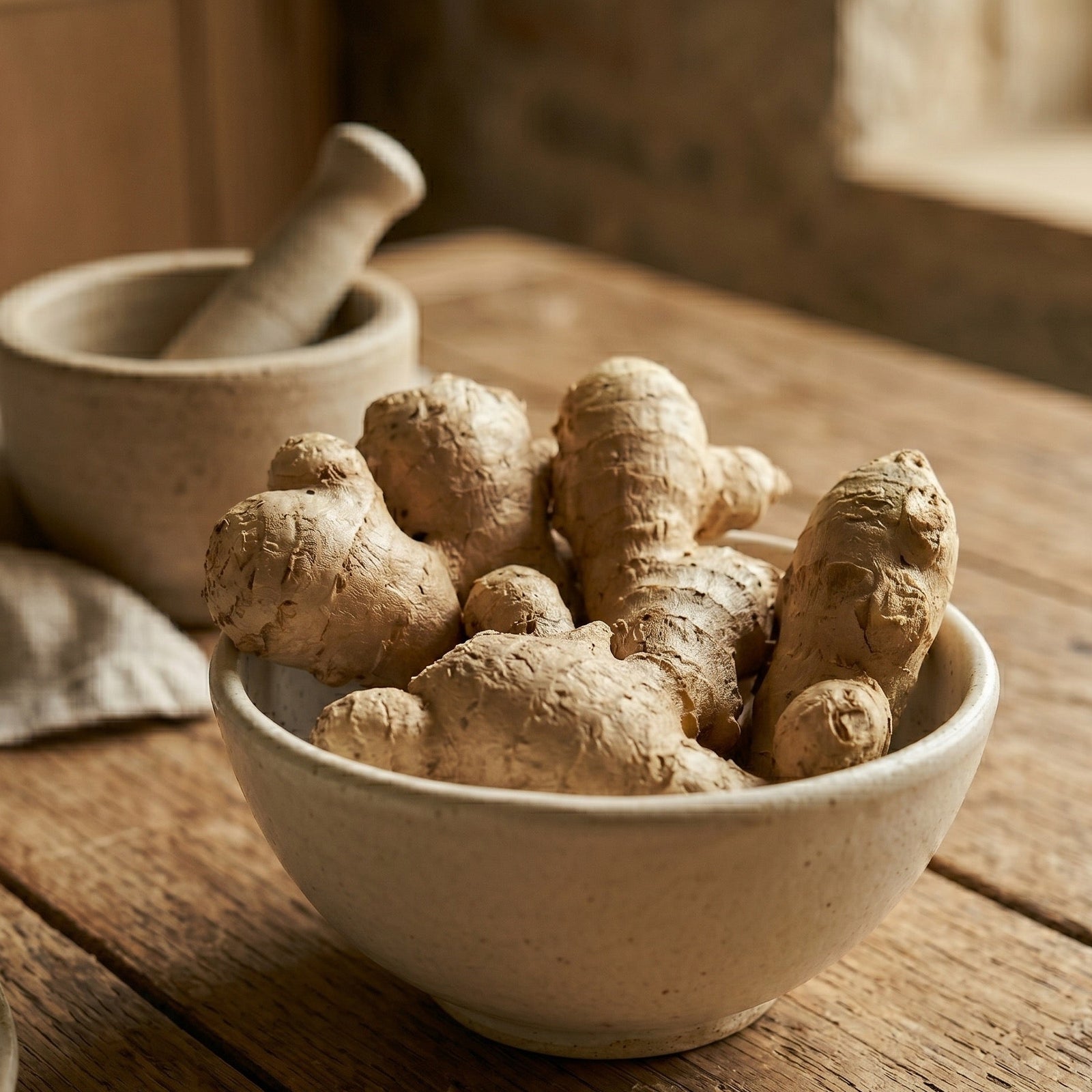
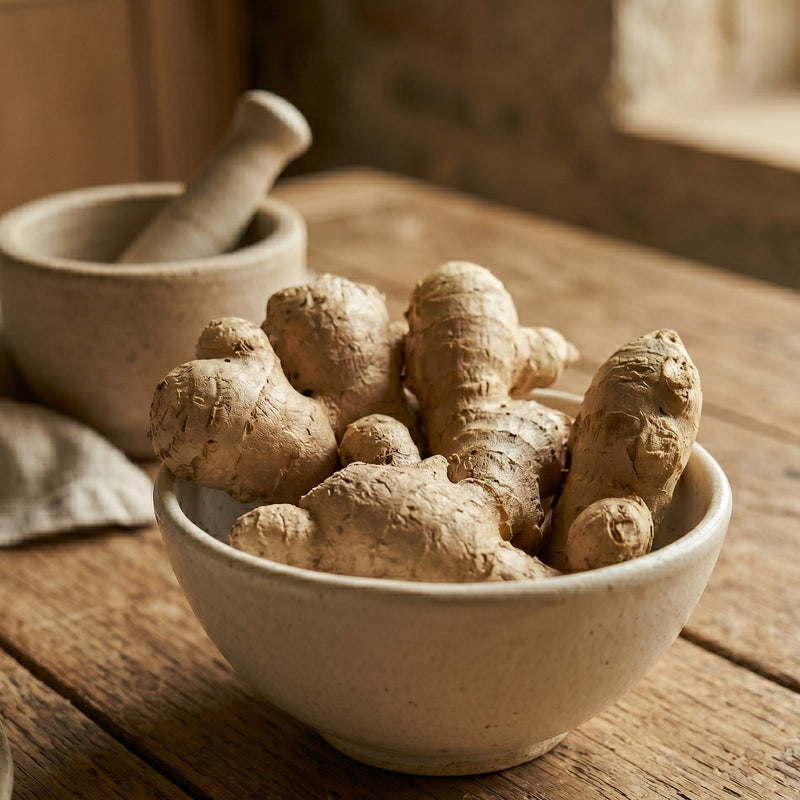
Ginger Root

Ginger grows in tropical warmth, in India, in West Africa, in the damp lowlands of Southeast Asia, and it carries that warmth in everything it does. I have worked with this plant for years in my practice, and what I have come to understand about it is that it does not ask permission. It moves into the digestive system with a kind of confident warmth that feels, to the body, like being held. In the first trimester, when everything is in flux and the stomach has strong opinions about everything, Ginger Root is the plant I return to first. Not as a quick fix, but as a genuine companion rooted in centuries of women's herbal knowledge.

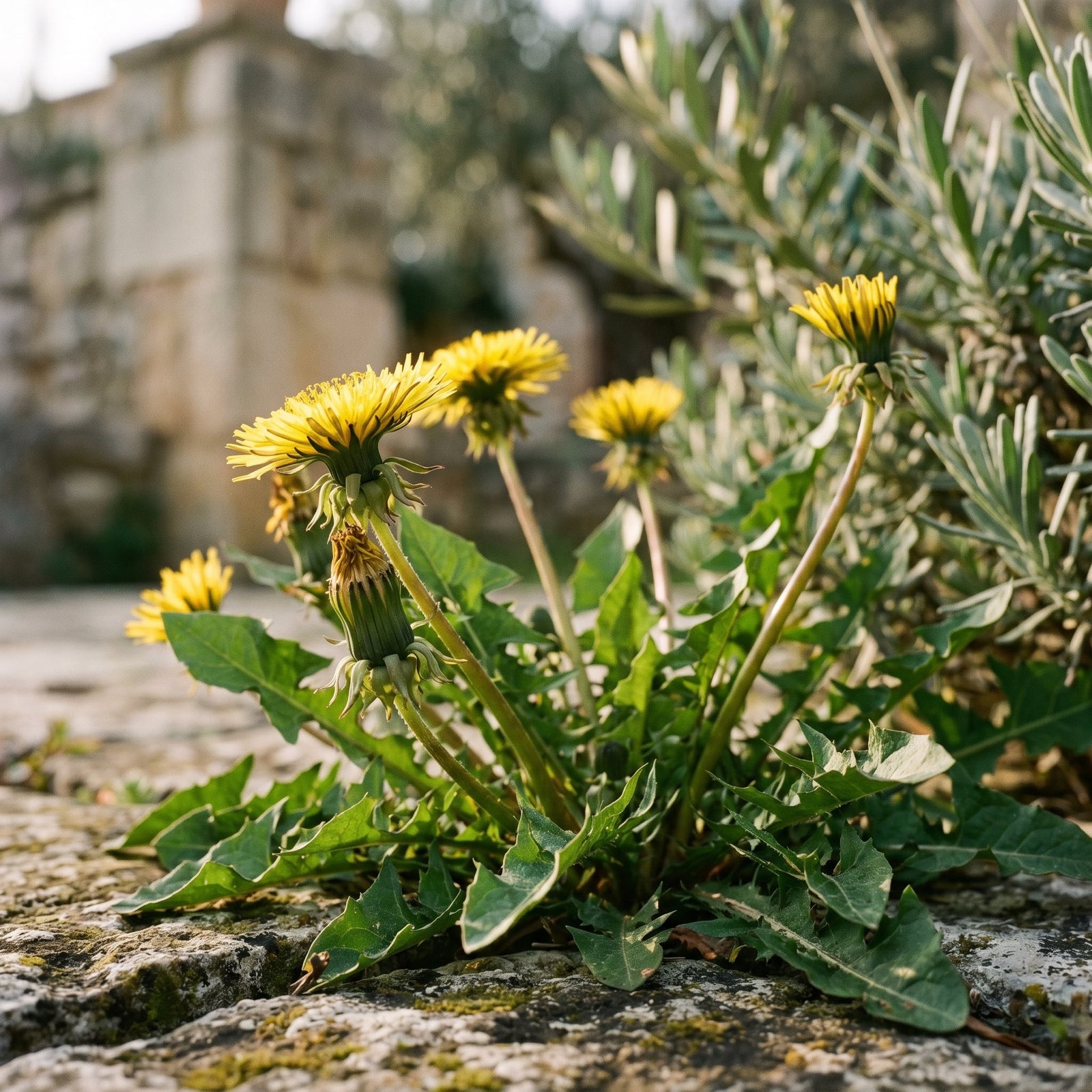
Dandelion Root

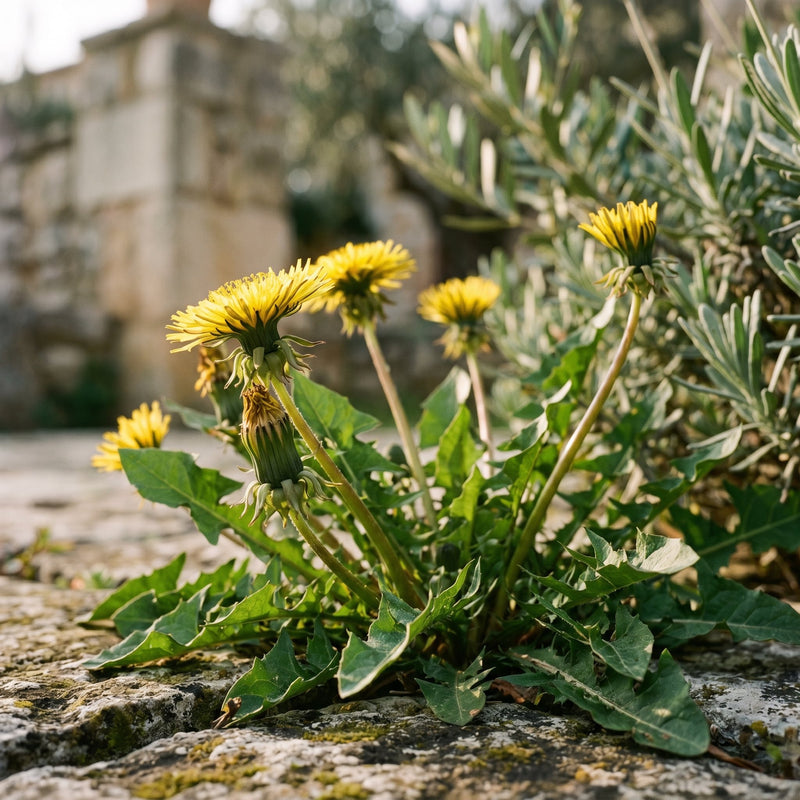
Dandelion grows in every yard, along every sidewalk crack, in every field that hasn't been sprayed into submission, and I think that ubiquity is part of what makes it easy to overlook. It is one of the most deeply nourishing plants in the Western herbal tradition, used for centuries across European and Indigenous North American herbalism to support the body's digestive and metabolic rhythms. I work with the root specifically for its gentle, grounding quality: the way it supports the liver and digestive organs in doing the slow, steady work they are always doing, without demanding anything dramatic in return. In a first-trimester formula, where the body's entire internal landscape is reorganizing, I wanted a plant that simply holds things steady. Dandelion Root does that the way it has always done everything: quietly, from the ground up.

Wild Yam Root

Wild Yam Root grows across the eastern woodlands of North America, a climbing vine with heart-shaped leaves and a history in traditional herbalism that runs deep through Indigenous and Appalachian plant traditions. In this formula, it is present in a supporting role: helping the digestive system find its steadiness during the first trimester, when the body is adjusting rapidly to something it has never done before in quite this way. I include it for its gentle, grounding quality. It is a plant that seems to ask the body to settle, to take the long view, to trust the process it is moving through.

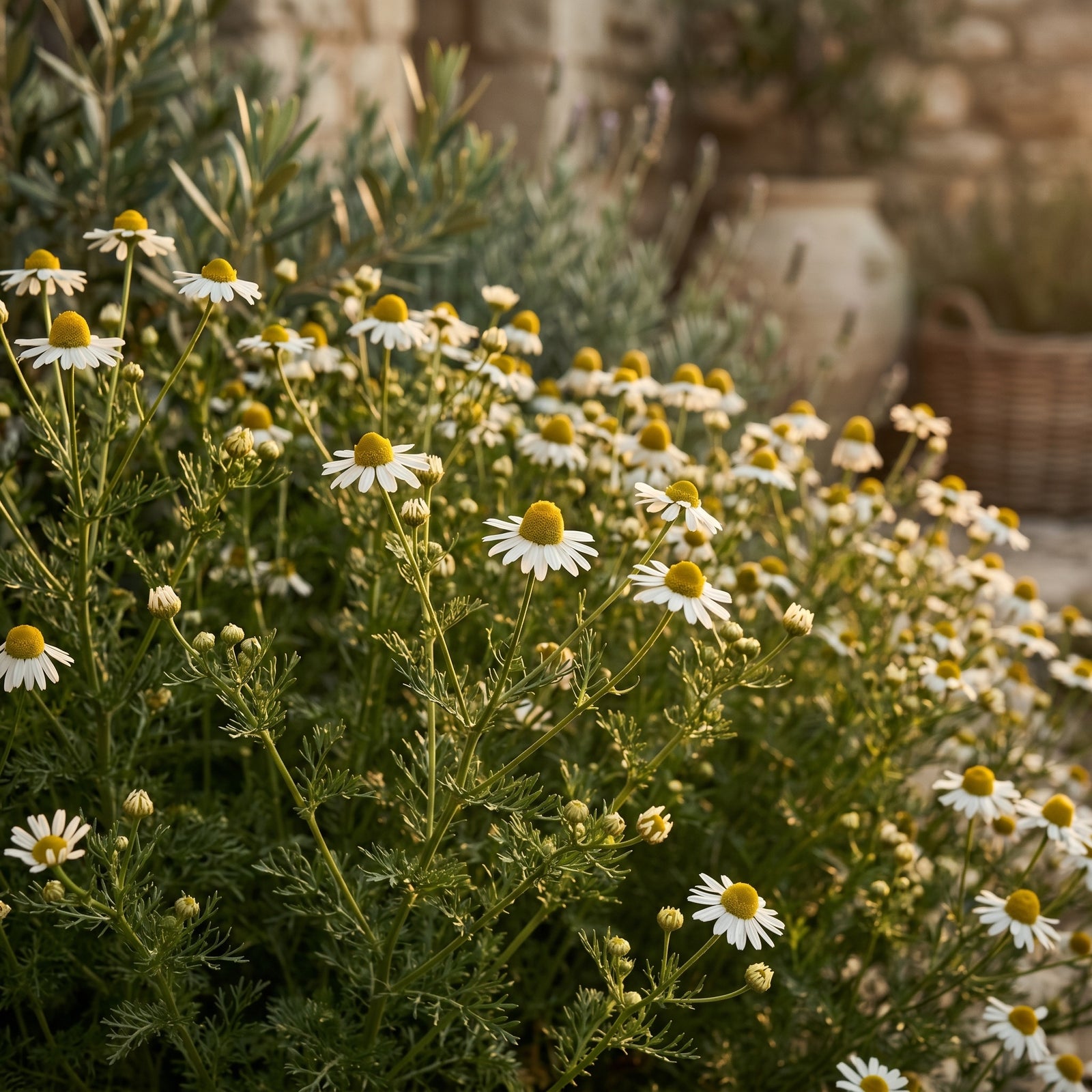
Chamomile Flower

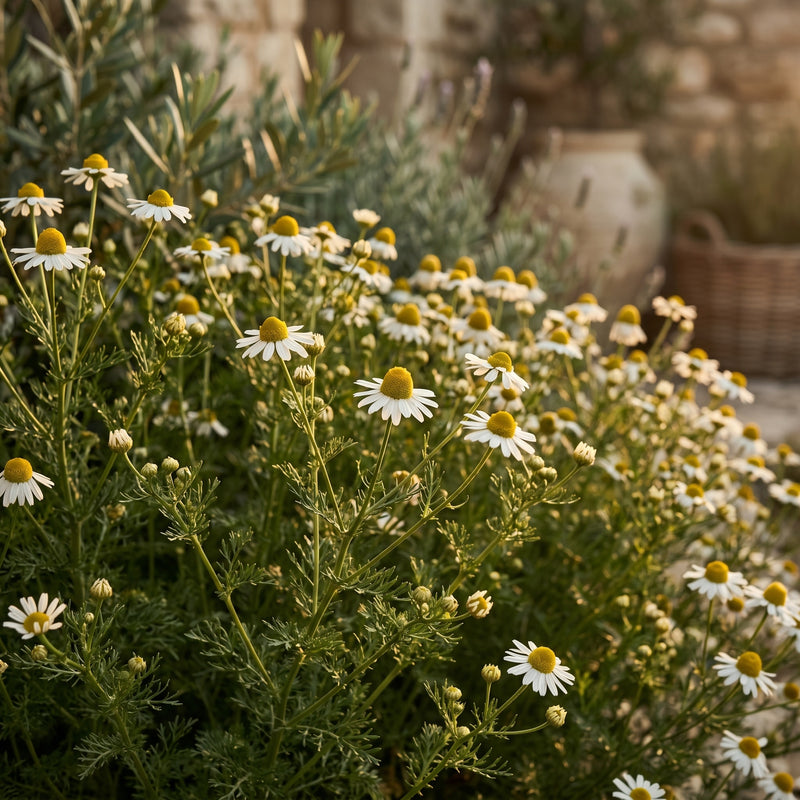
Chamomile grows low to the ground, in fields and along roadsides throughout Europe and western Asia, and something about its smallness has always seemed important to me. This unassuming flower has been gathered by women's hands for thousands of years. My grandmother kept it. Her grandmother kept it before her. In a first-trimester formula, Chamomile is doing something specific: it is attending to the place where the digestive system and the nervous system meet, which, during early pregnancy, is exactly where the discomfort lives. Warm. Gentle. Unhurried.

Ginger Root

Ginger grows in tropical warmth, in India, in West Africa, in the damp lowlands of Southeast Asia, and it carries that warmth in everything it does. I have worked with this plant for years in my practice, and what I have come to understand about it is that it does not ask permission. It moves into the digestive system with a kind of confident warmth that feels, to the body, like being held. In the first trimester, when everything is in flux and the stomach has strong opinions about everything, Ginger Root is the plant I return to first. Not as a quick fix, but as a genuine companion rooted in centuries of women's herbal knowledge.

Dandelion Root

Dandelion grows in every yard, along every sidewalk crack, in every field that hasn't been sprayed into submission, and I think that ubiquity is part of what makes it easy to overlook. It is one of the most deeply nourishing plants in the Western herbal tradition, used for centuries across European and Indigenous North American herbalism to support the body's digestive and metabolic rhythms. I work with the root specifically for its gentle, grounding quality: the way it supports the liver and digestive organs in doing the slow, steady work they are always doing, without demanding anything dramatic in return. In a first-trimester formula, where the body's entire internal landscape is reorganizing, I wanted a plant that simply holds things steady. Dandelion Root does that the way it has always done everything: quietly, from the ground up.

Wild Yam Root

Wild Yam Root grows across the eastern woodlands of North America, a climbing vine with heart-shaped leaves and a history in traditional herbalism that runs deep through Indigenous and Appalachian plant traditions. In this formula, it is present in a supporting role: helping the digestive system find its steadiness during the first trimester, when the body is adjusting rapidly to something it has never done before in quite this way. I include it for its gentle, grounding quality. It is a plant that seems to ask the body to settle, to take the long view, to trust the process it is moving through.

Chamomile Flower

Chamomile grows low to the ground, in fields and along roadsides throughout Europe and western Asia, and something about its smallness has always seemed important to me. This unassuming flower has been gathered by women's hands for thousands of years. My grandmother kept it. Her grandmother kept it before her. In a first-trimester formula, Chamomile is doing something specific: it is attending to the place where the digestive system and the nervous system meet, which, during early pregnancy, is exactly where the discomfort lives. Warm. Gentle. Unhurried.

Rooted in Lineage. Made with Reverence.

Every formula in this apothecary is made in small batches in Los Angeles, using herbs that are organically grown or seasonally wildcrafted whenever possible. We work with plants at the peak of their potency — harvested in the right season, prepared slowly, and handled with the same reverence we hope you bring to using them.

This is medicine in the oldest sense of the word: plant wisdom, carefully tended, passed forward with care.

Jasmine's Note

My grandmother didn't call it herbalism. She just knew things — which plants to reach for, which roots to dry, what the earth offered when the body asked. She learned it from her father, who kept a garden in Biloxi and understood plants the way some people understand people. That knowledge passed to her, and quietly, to me.

I didn't fully understand what I'd inherited until my own body started asking questions that medicine couldn't answer. Hormonal chaos, long seasons of depression, the particular exhaustion of feeling disconnected from yourself. I remembered the whisperings. I turned back toward the plants. Everything in this apothecary came from that turning — things I made for myself first, and then for the women in my life who needed the same. I offer them to you the way my grandmother offered what she knew: as a hand extended, as something real.

-Jasmine

Frequently Asked Questions

A Note on Plant Medicine

Plants are powerful — and like any potent thing, they deserve to be used with care and knowledge. These formulas are crafted with intention, but they are not a substitute for medical guidance. Before beginning a new herbal practice, we encourage you to speak with your healthcare provider, especially if you are pregnant, nursing, trying to conceive, managing a health condition, or taking prescription medication. Wild Woman products are not intended to diagnose, treat, cure, or prevent any disease.


These statements have not been evaluated by the Food and Drug Administration. This product is not intended to diagnose, treat, cure, or prevent any disease.

Wild Woman products are crafted to support a slow, intentional wellness practice, not to replace professional medical care. Please consult your healthcare provider before beginning any new herbal practice, especially if you are pregnant, breastfeeding, taking medication, or managing a health condition.

Read our full Wellness Disclaimer →


WARNING: This product may contain chemicals known to the State of California to cause cancer, birth defects, or other reproductive harm.

For more information, visit www.P65Warnings.ca.gov.