


Skip to content

Cart

Your cart is empty

SEASONAL SUPPORT

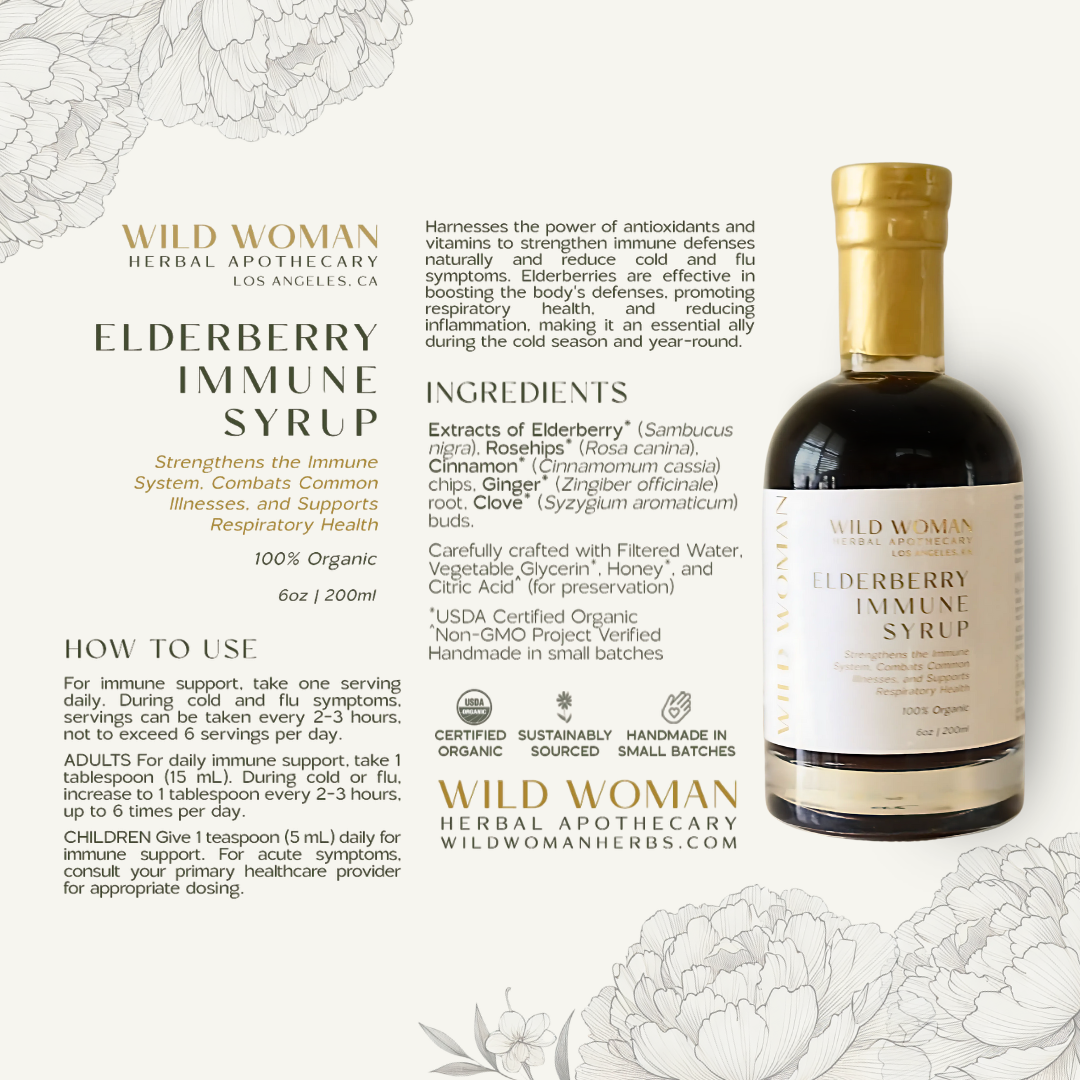
Elderberry Immune Syrup

daily immune support for the whole family

Sale price$34.00

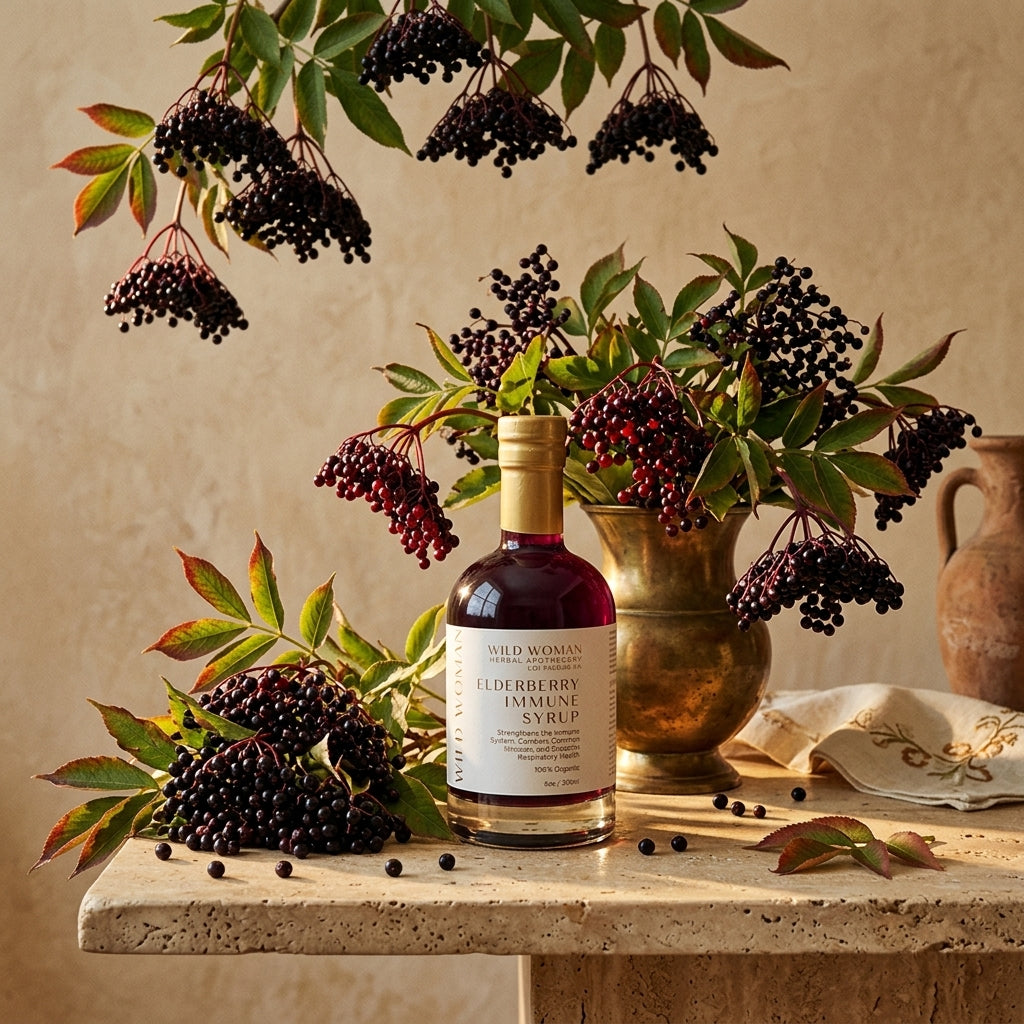
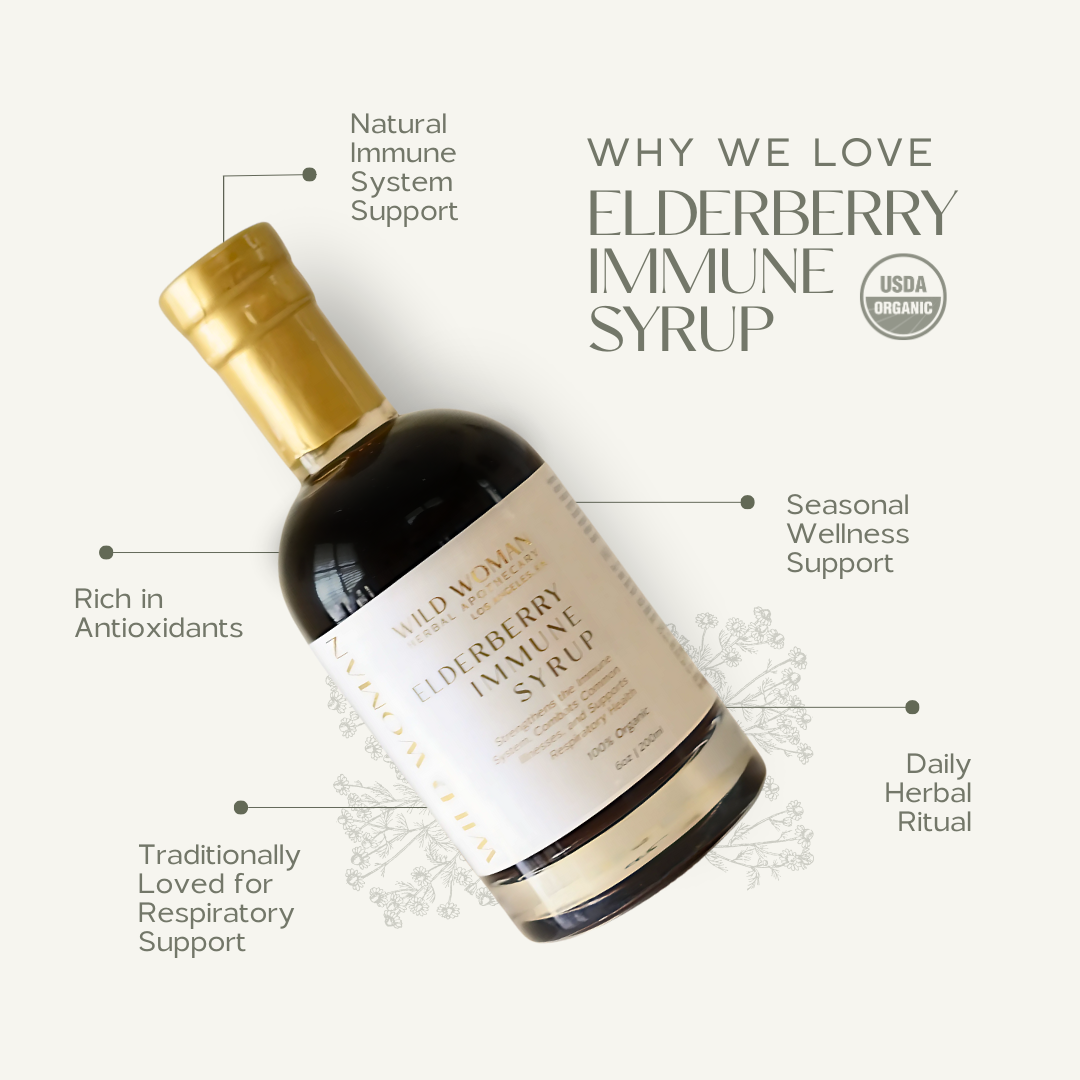
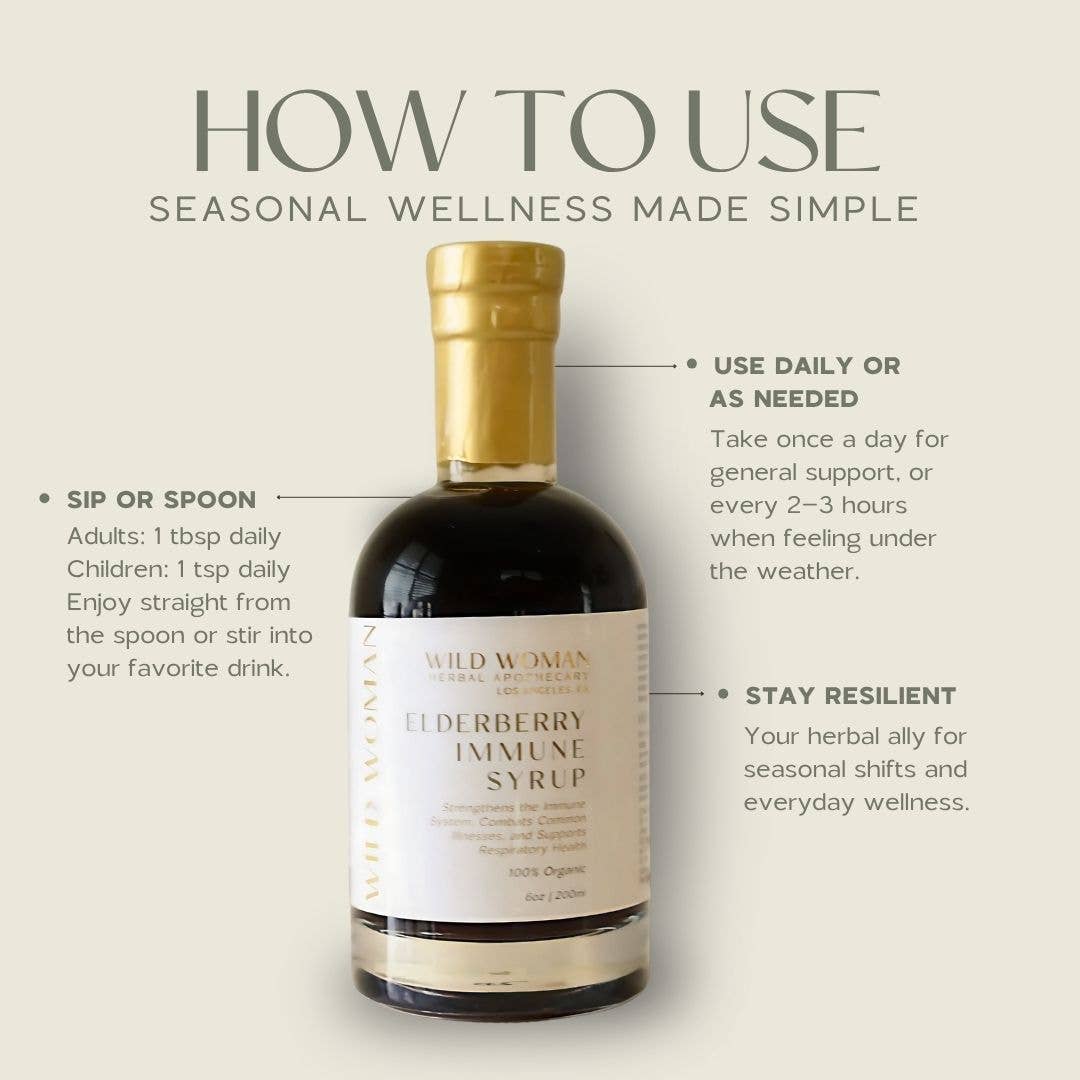
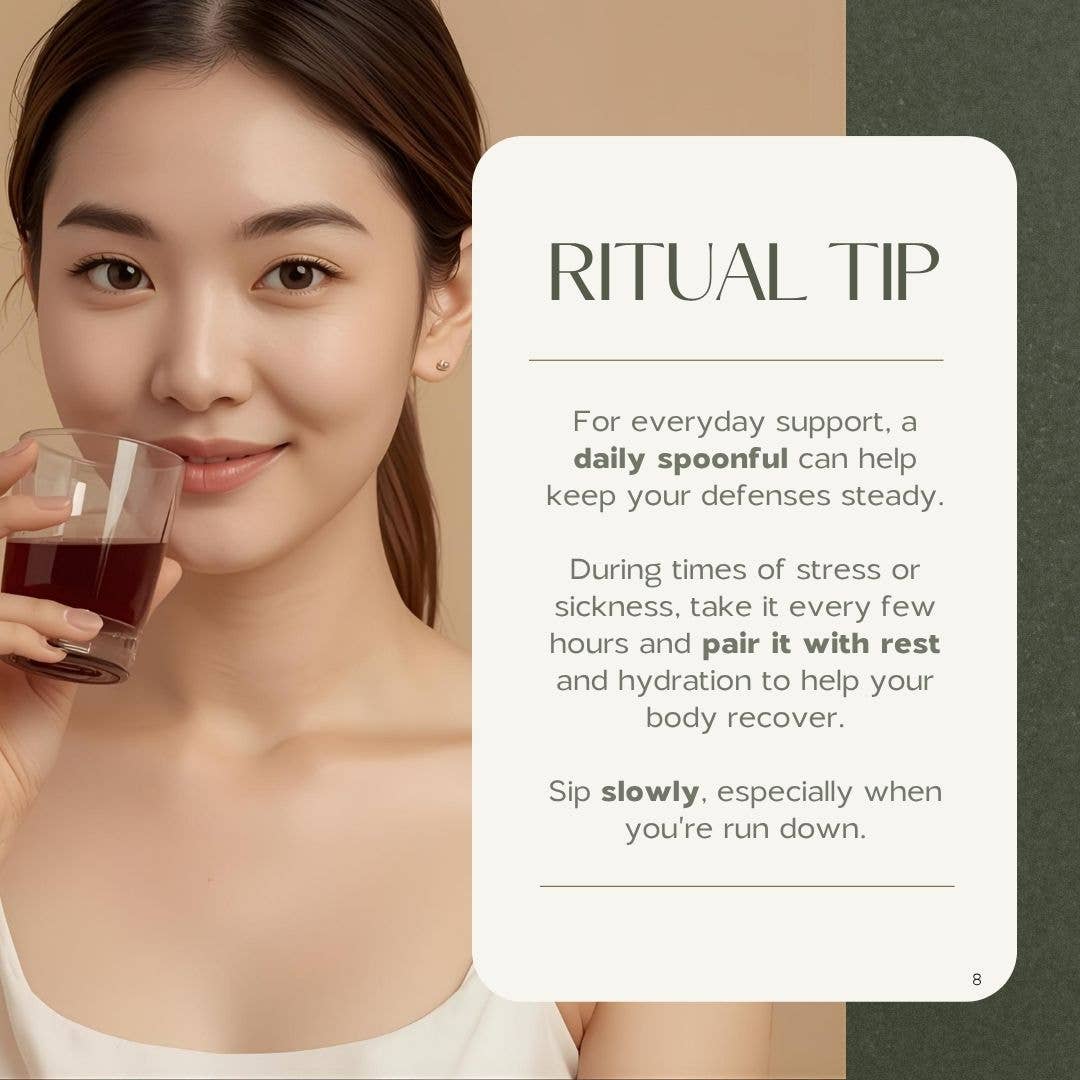
When the air turns and the season begins to ask more of you and the people you love, this elderberry syrup is the spoonful you reach for, gentle daily immune support that tastes more like care than medicine. Sambucus nigra, simmered slow with rosehips and warming spices and folded into raw honey, made the way households have tended their people through the cold months for generations. A small ritual the whole family can return to, one spoonful at a time, all season long.

sweet · gently spiced · warming · berry-deep · comforting

Elderberry Immune Syrup
Elderberry Immune Syrup Sale price$34.00

Elderberry Syrup

PRODUCT DETAILS

The Plants

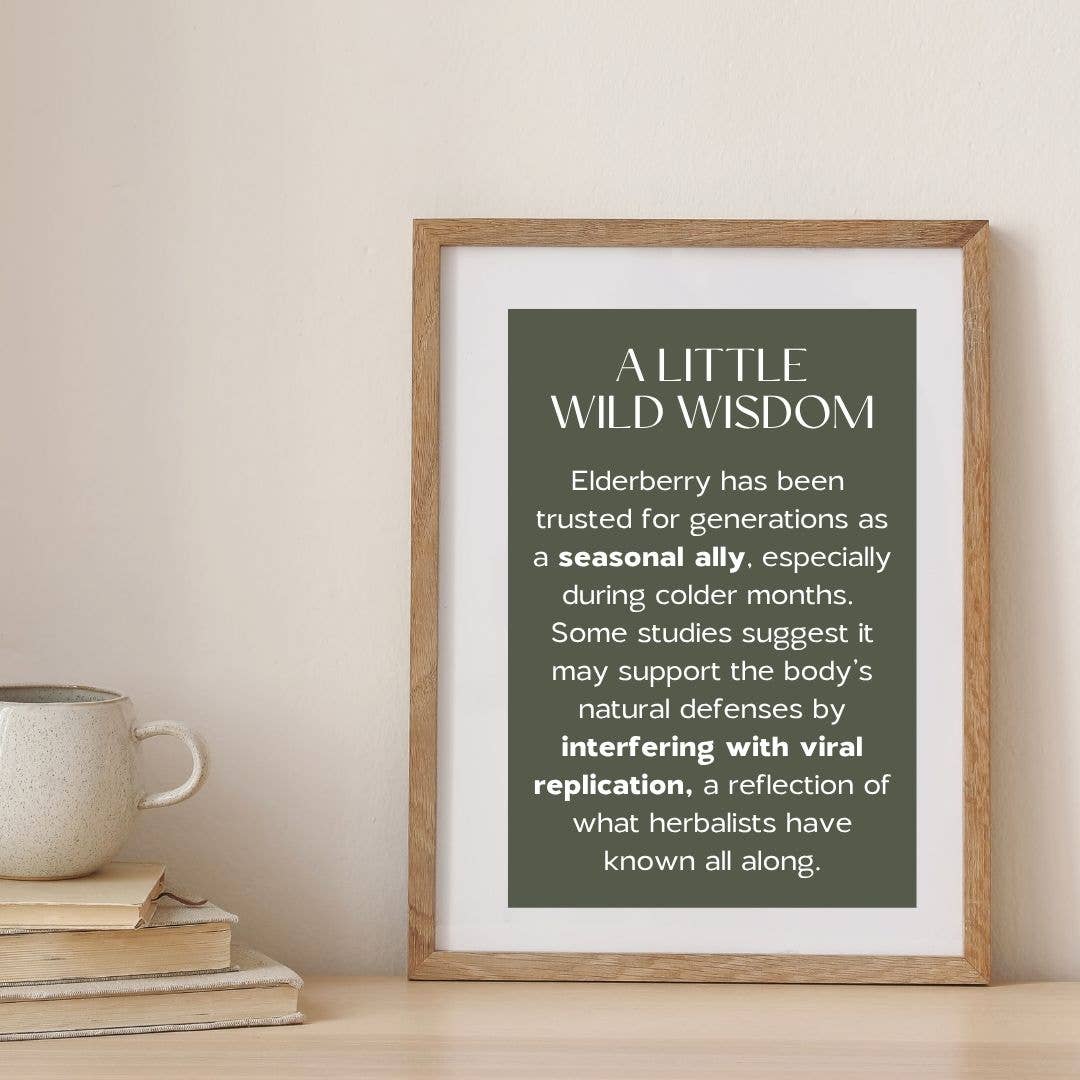
Elderberry has been the dark berry of the cold months for as long as people have lived alongside the elder tree. Across Europe, the elder was the household plant, the one growing by the back door, the one the grandmother turned to when the wind changed and the children came in cold. This syrup is built around that berry, Sambucus nigra, in its most concentrated and traditional form, because some plants do not need company to do their work. They need to be made well.

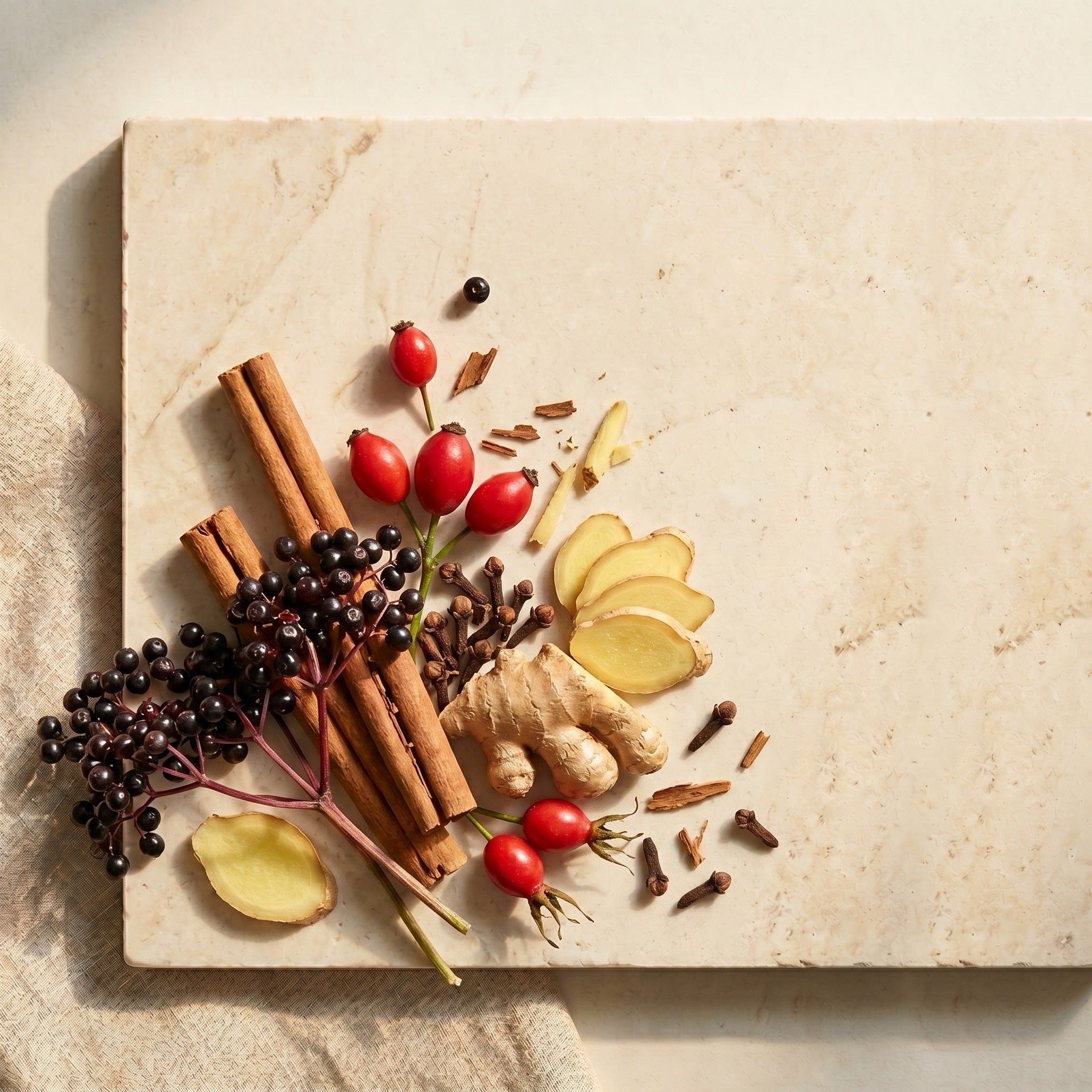
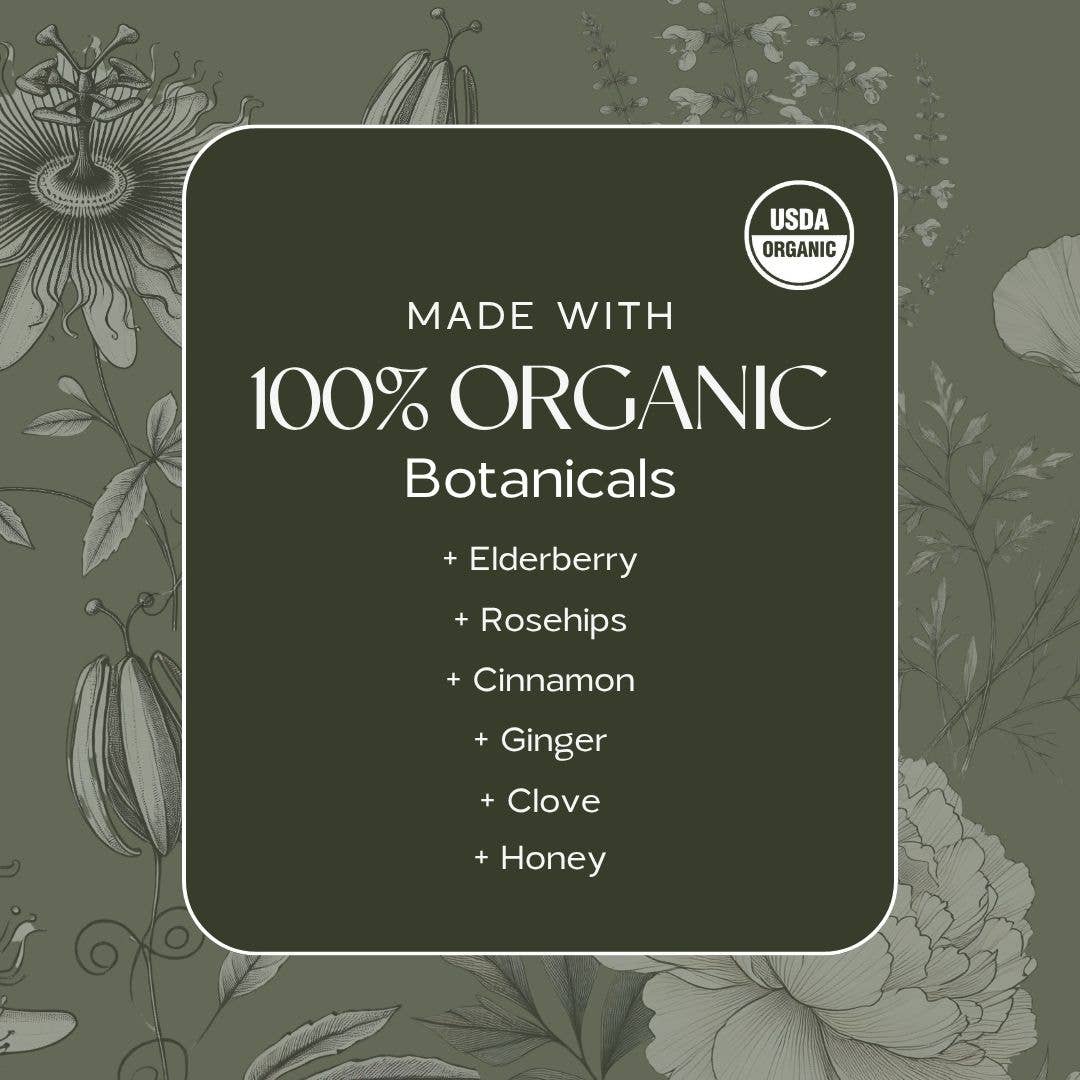
What surrounds the elderberry is chosen for warmth and for the body's own resilience as the season turns. Rosehips, the bright fruit of the wild rose, bring their long association with vitamin C and seasonal nourishment. Cinnamon, ginger, and clove are the warming spices, the ones that bring heat to the center of the body and have flavored nearly every traditional cold-season preparation across cultures and centuries. Raw honey carries them all, the way honey has always carried medicine, sweetening the spoonful so the whole family will take it.

I made this as a syrup, not a tea or a tincture, for a reason. A syrup is the format a household can keep on the counter and reach for without thinking, the spoonful a child will take willingly, the one ritual that does not ask anyone to slow down or steep or measure. It is the simplest way I know to bring the elder tree into the daily life of a family through the long, cold season.

Tasting Notes

Tasting Notes

Sweet · warming · gently spiced · deep berry

Pairs With

Pairs With

Warm tea · rest · nourishing meals

Season

Season

Cold and flu season

Energetics

Energetics

Warming from within

Tasting Notes

Tasting Notes

Sweet · warming · gently spiced · deep berry

Pairs With

Pairs With

Warm tea · rest · nourishing meals

Season

Season

Cold and flu season

Energetics

Energetics

Warming from within

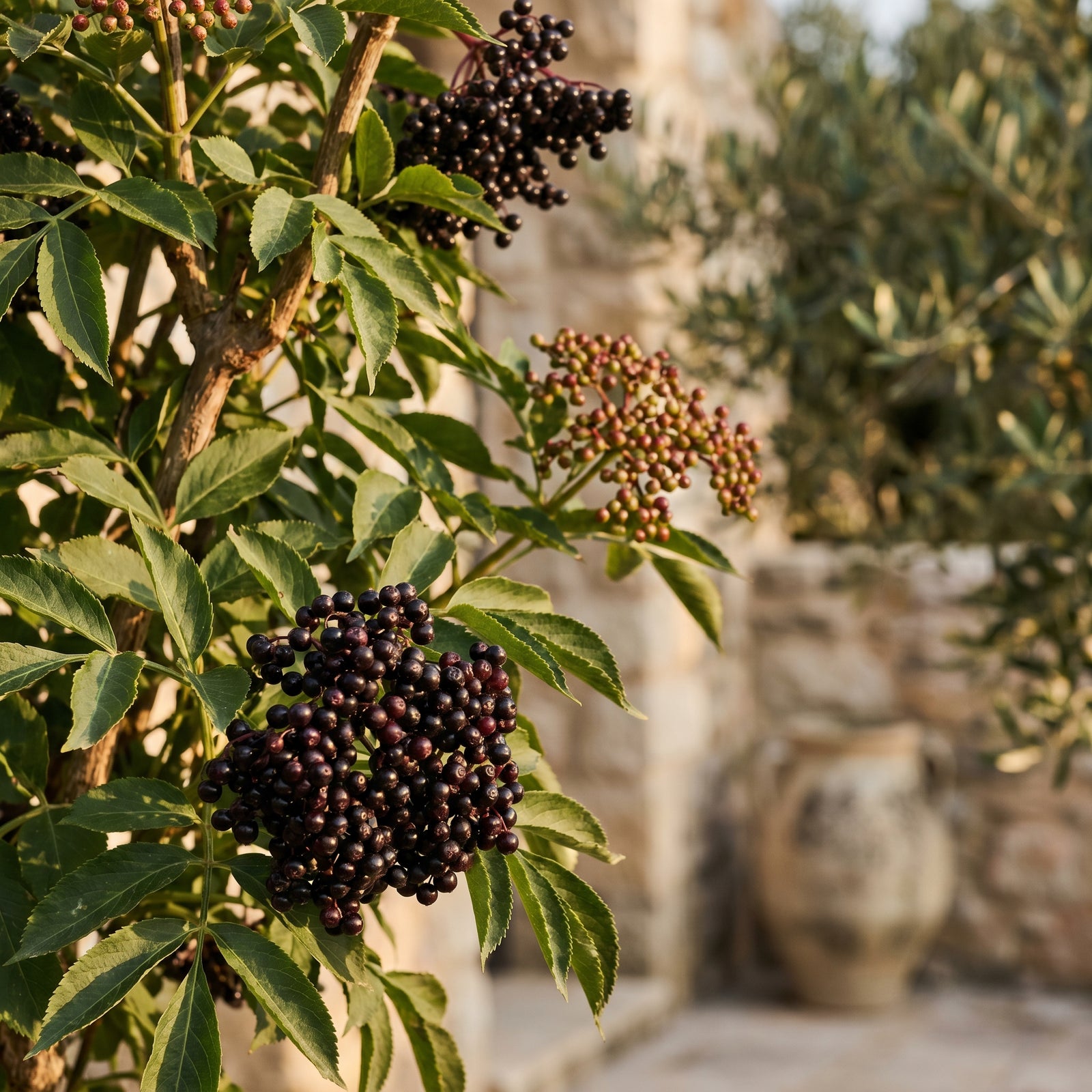
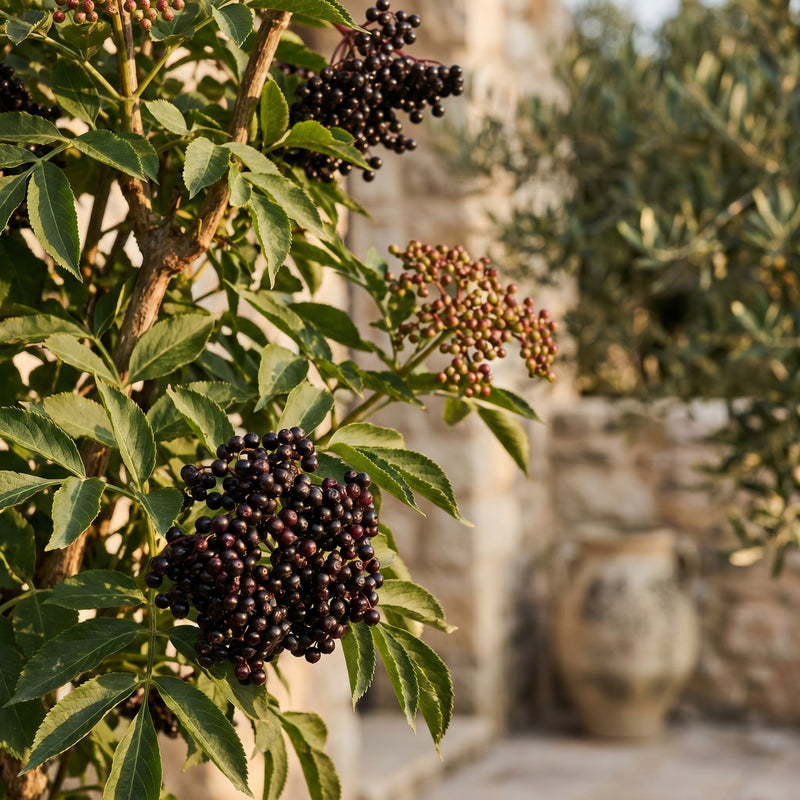
Elderberry

Elderberry grows on the elder tree, a scrappy, generous plant that turns up at the edges of fields and along old hedgerows, flowering white in spring and hanging heavy with dark berries by late summer. In the folk traditions of Northern Europe the elder was treated almost as a member of the household, a tree you asked permission of before you took from it. The berries have been simmered into cordials and syrups for the cold months for as long as anyone can trace, gathered and cooked down the way you would put up any fruit for winter. In my own kitchen, elderberry is the first plant I reach for when the season turns. It is the berry I want my family to have on the counter from October on.

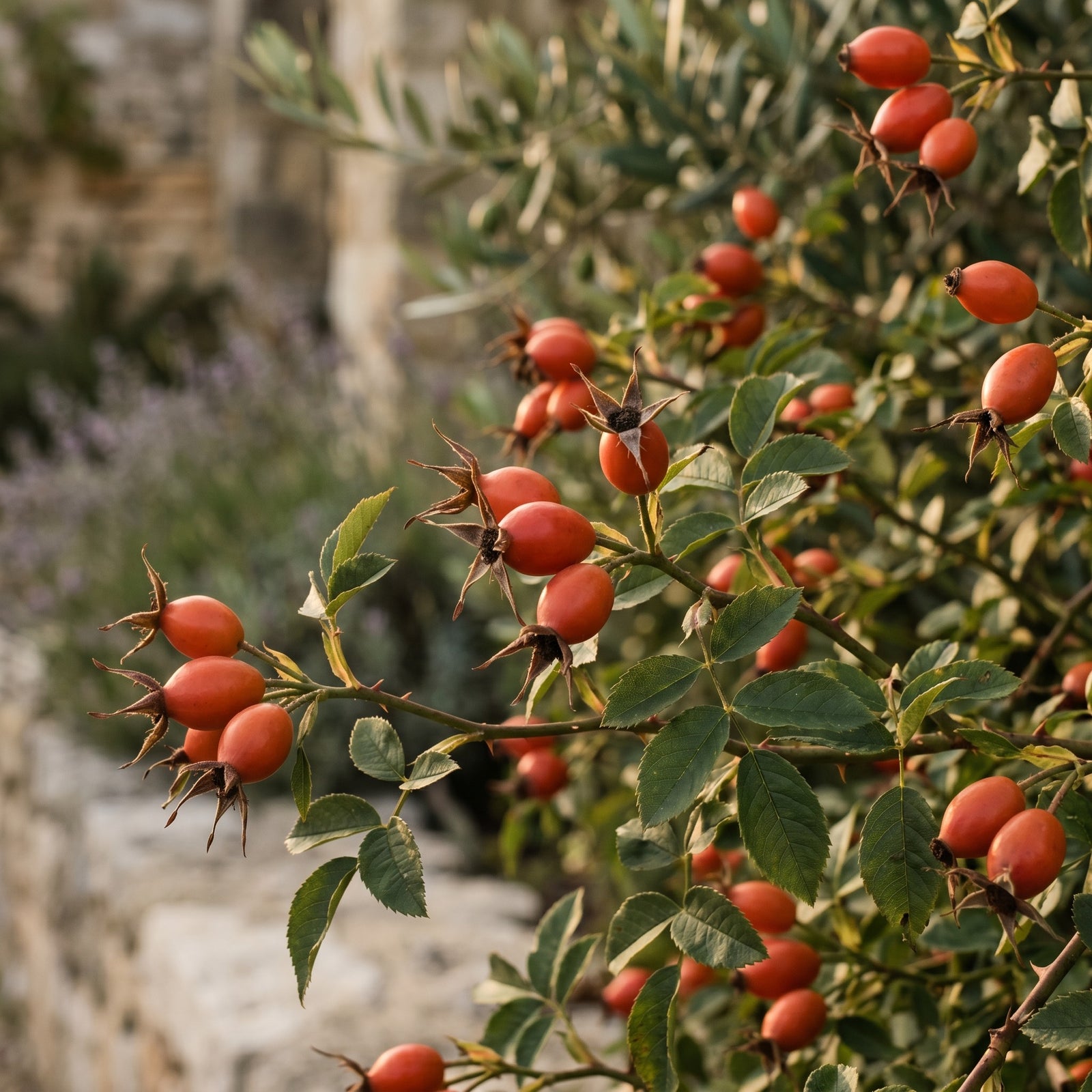
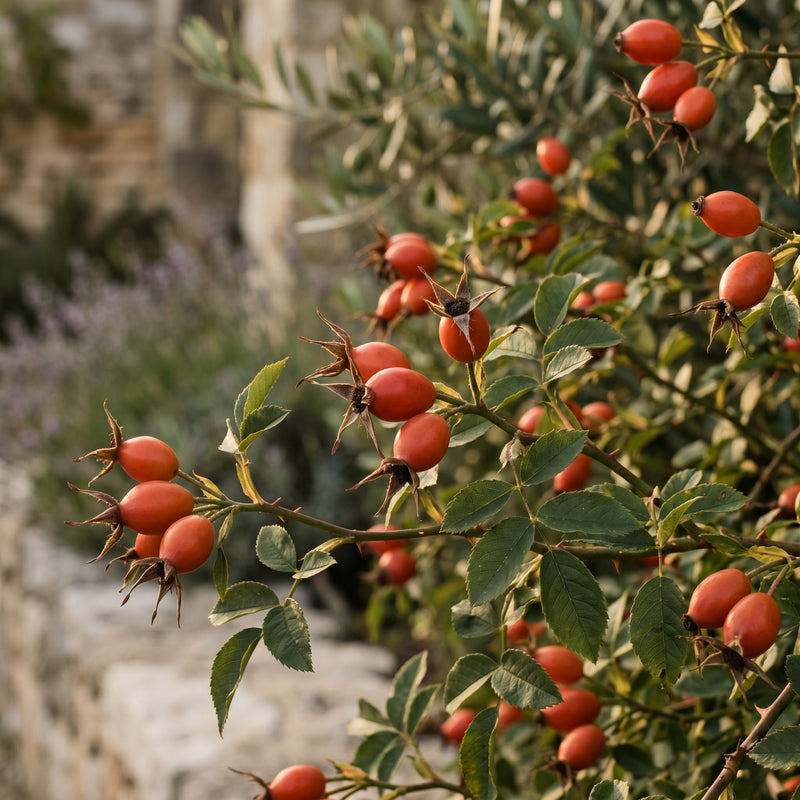
Rosehips

Rosehips are the fruit the wild rose leaves behind after the petals fall, small and red and tart, ripening as the days shorten. The bramble roses I know hold their hips right through the first frosts, which has always felt like the plant's own answer to the season. Traditional households across Europe gathered them for their brightness in the cold months, when little else fresh was left, and they carry a long association with vitamin C and seasonal nourishment. In this syrup, rosehips are the bright note beside the deep elderberry, the wild rose keeping company with the elder the way the two so often grow near one another in the hedge.

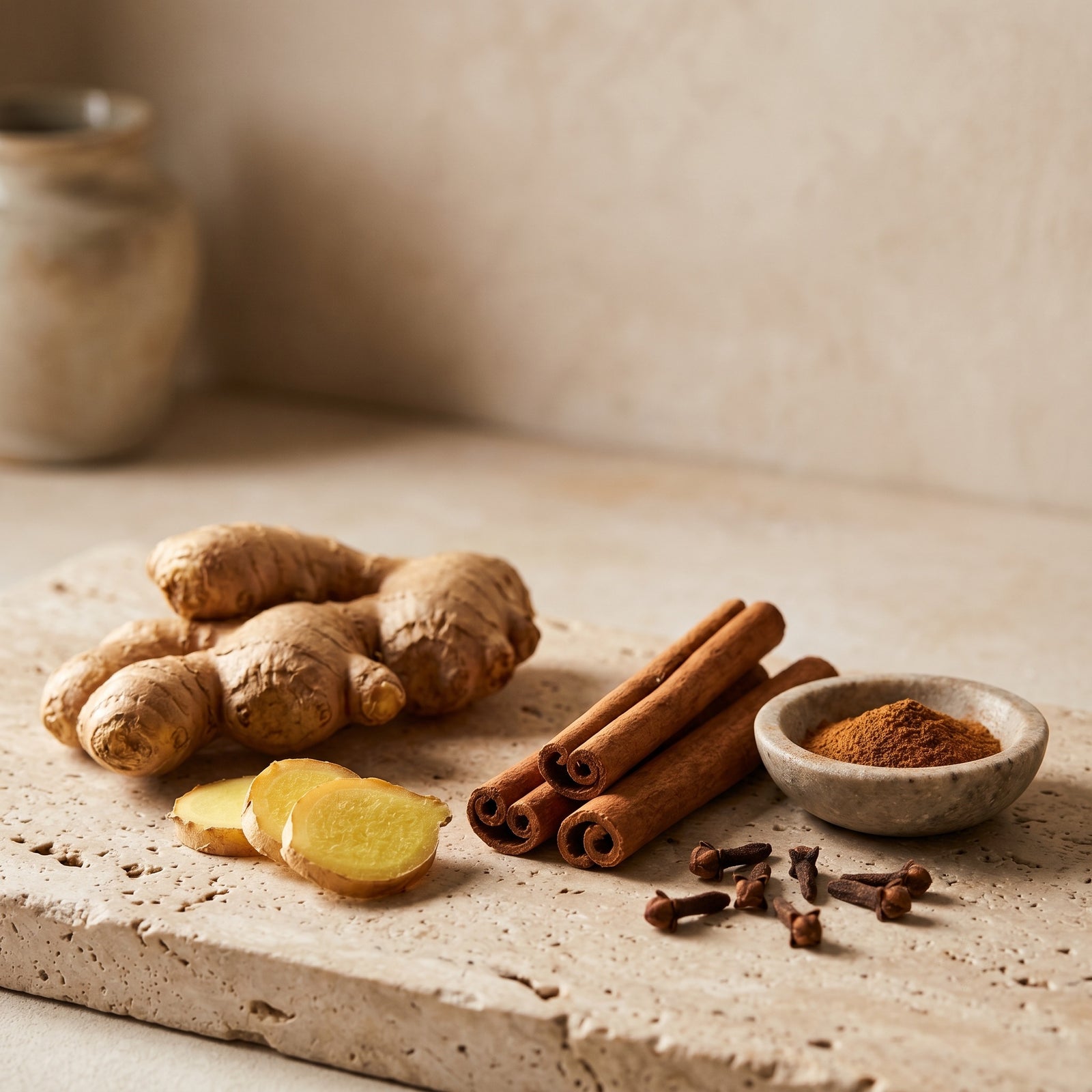
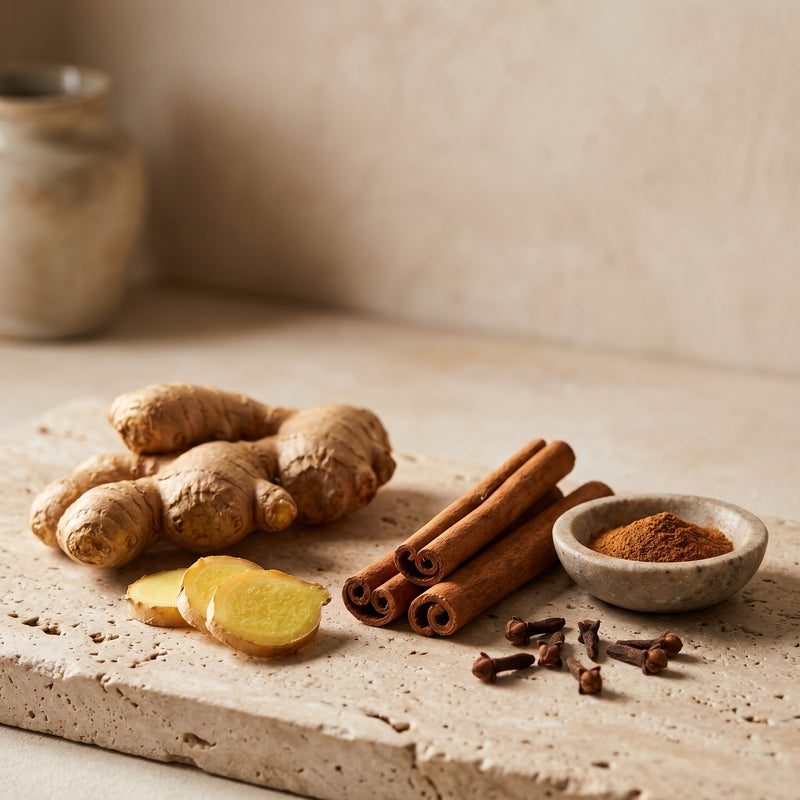
The Warming Spices

Ginger, cinnamon, and clove are the warming spices, and they have flavored the cold-season preparations of nearly every culture I have studied, from the chai pots of South Asia to the mulled cordials of old Europe. The ginger root brings heat that starts at the center of the body and moves outward. The cinnamon here is cassia, Cinnamomum cassia, the bolder and darker of the cinnamons, chosen over the milder Ceylon because a winter syrup wants depth more than delicacy. Clove is the smallest and most aromatic of the three, the one you smell first when the jar opens. Together they are the warmth in the spoonful, the reason it tastes the way the cold months are supposed to taste.

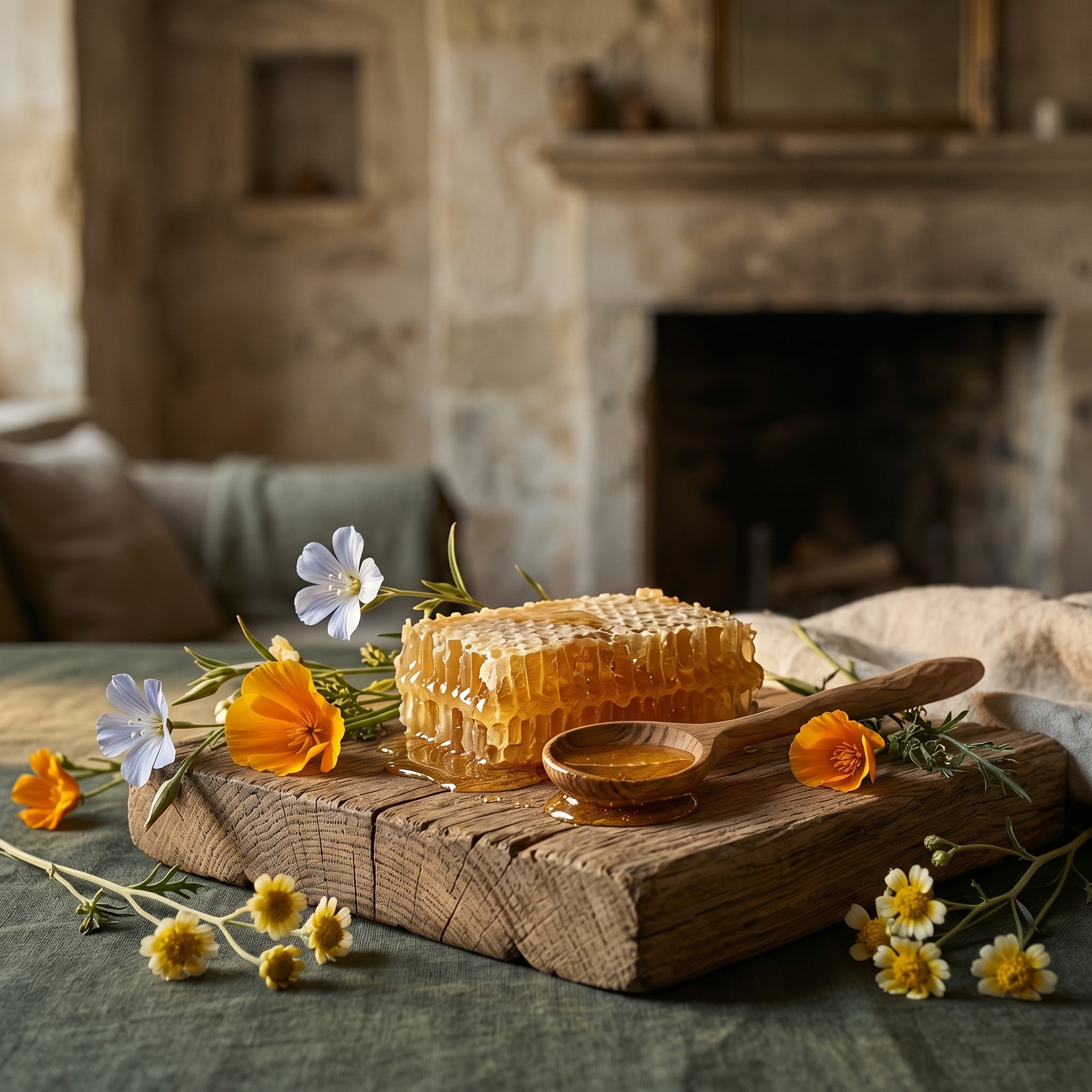
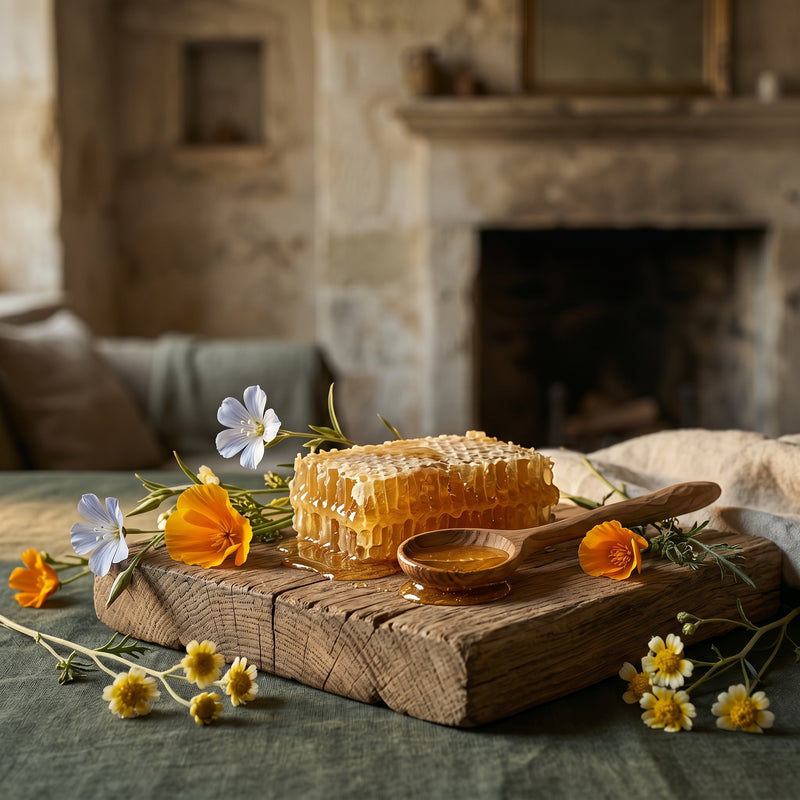
Raw Honey

The honey in this syrup is raw and unheated, folded in at the very end so its living quality is never cooked away. It comes from bees and the flowers they tended, which means a jar of honey is really a record of a particular landscape and season, the way wine is. Across nearly every tradition I know, honey has been the thing that carries the medicine, the sweetness that turns a herbal preparation into something a child will take willingly and an adult looks forward to. In a syrup meant for the whole family, that matters as much as anything else in the bottle. It is the reason a spoonful feels less like a dose and more like care.

Elderberry

Elderberry grows on the elder tree, a scrappy, generous plant that turns up at the edges of fields and along old hedgerows, flowering white in spring and hanging heavy with dark berries by late summer. In the folk traditions of Northern Europe the elder was treated almost as a member of the household, a tree you asked permission of before you took from it. The berries have been simmered into cordials and syrups for the cold months for as long as anyone can trace, gathered and cooked down the way you would put up any fruit for winter. In my own kitchen, elderberry is the first plant I reach for when the season turns. It is the berry I want my family to have on the counter from October on.

Rosehips

Rosehips are the fruit the wild rose leaves behind after the petals fall, small and red and tart, ripening as the days shorten. The bramble roses I know hold their hips right through the first frosts, which has always felt like the plant's own answer to the season. Traditional households across Europe gathered them for their brightness in the cold months, when little else fresh was left, and they carry a long association with vitamin C and seasonal nourishment. In this syrup, rosehips are the bright note beside the deep elderberry, the wild rose keeping company with the elder the way the two so often grow near one another in the hedge.

The Warming Spices

Ginger, cinnamon, and clove are the warming spices, and they have flavored the cold-season preparations of nearly every culture I have studied, from the chai pots of South Asia to the mulled cordials of old Europe. The ginger root brings heat that starts at the center of the body and moves outward. The cinnamon here is cassia, Cinnamomum cassia, the bolder and darker of the cinnamons, chosen over the milder Ceylon because a winter syrup wants depth more than delicacy. Clove is the smallest and most aromatic of the three, the one you smell first when the jar opens. Together they are the warmth in the spoonful, the reason it tastes the way the cold months are supposed to taste.

Raw Honey

The honey in this syrup is raw and unheated, folded in at the very end so its living quality is never cooked away. It comes from bees and the flowers they tended, which means a jar of honey is really a record of a particular landscape and season, the way wine is. Across nearly every tradition I know, honey has been the thing that carries the medicine, the sweetness that turns a herbal preparation into something a child will take willingly and an adult looks forward to. In a syrup meant for the whole family, that matters as much as anything else in the bottle. It is the reason a spoonful feels less like a dose and more like care.

Rooted in Lineage. Made with Reverence.

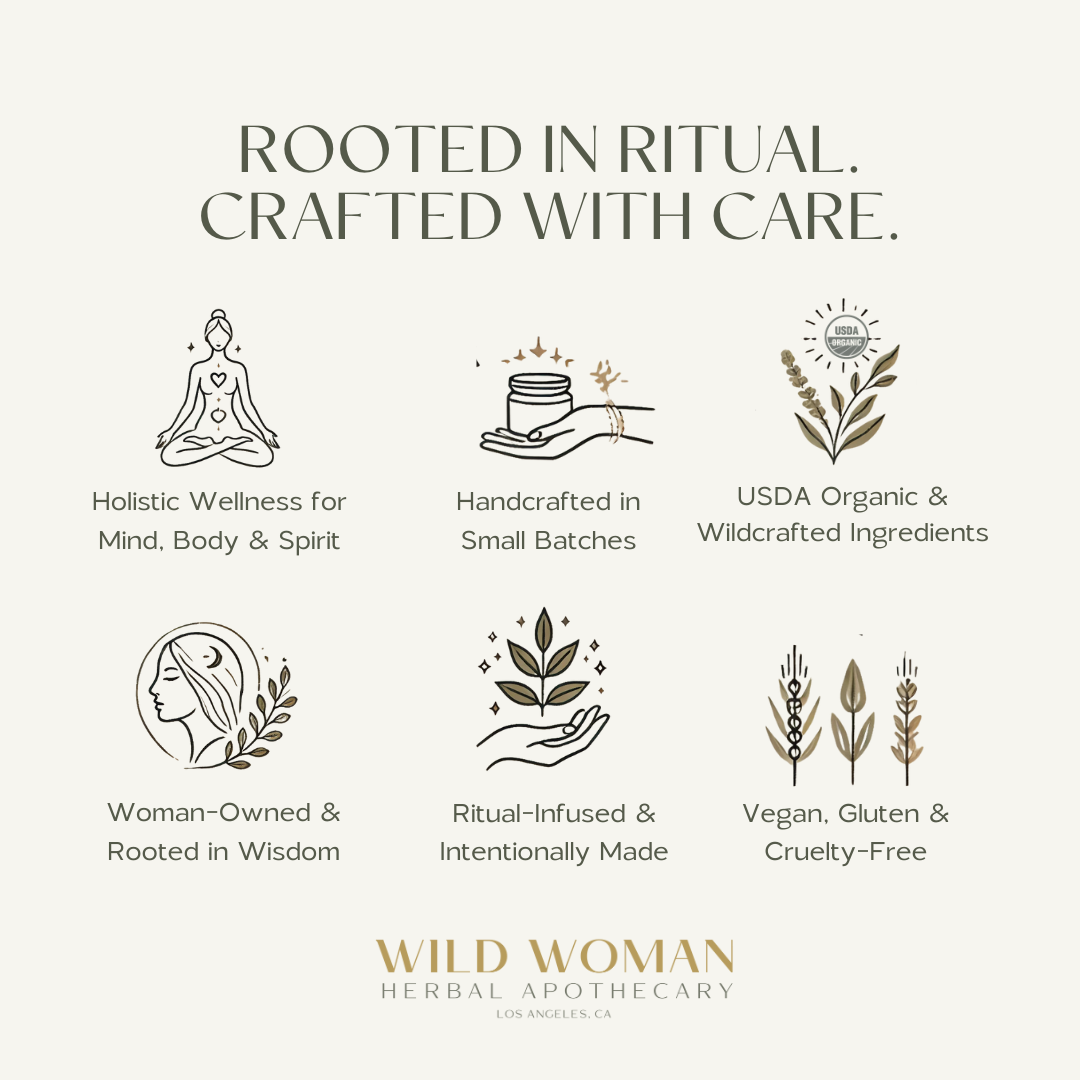
Every formula in this apothecary is made in small batches in Los Angeles, using herbs that are organically grown or seasonally wildcrafted whenever possible. We work with plants at the peak of their potency — harvested in the right season, prepared slowly, and handled with the same reverence we hope you bring to using them.

This is medicine in the oldest sense of the word: plant wisdom, carefully tended, passed forward with care.

Jasmine's Note

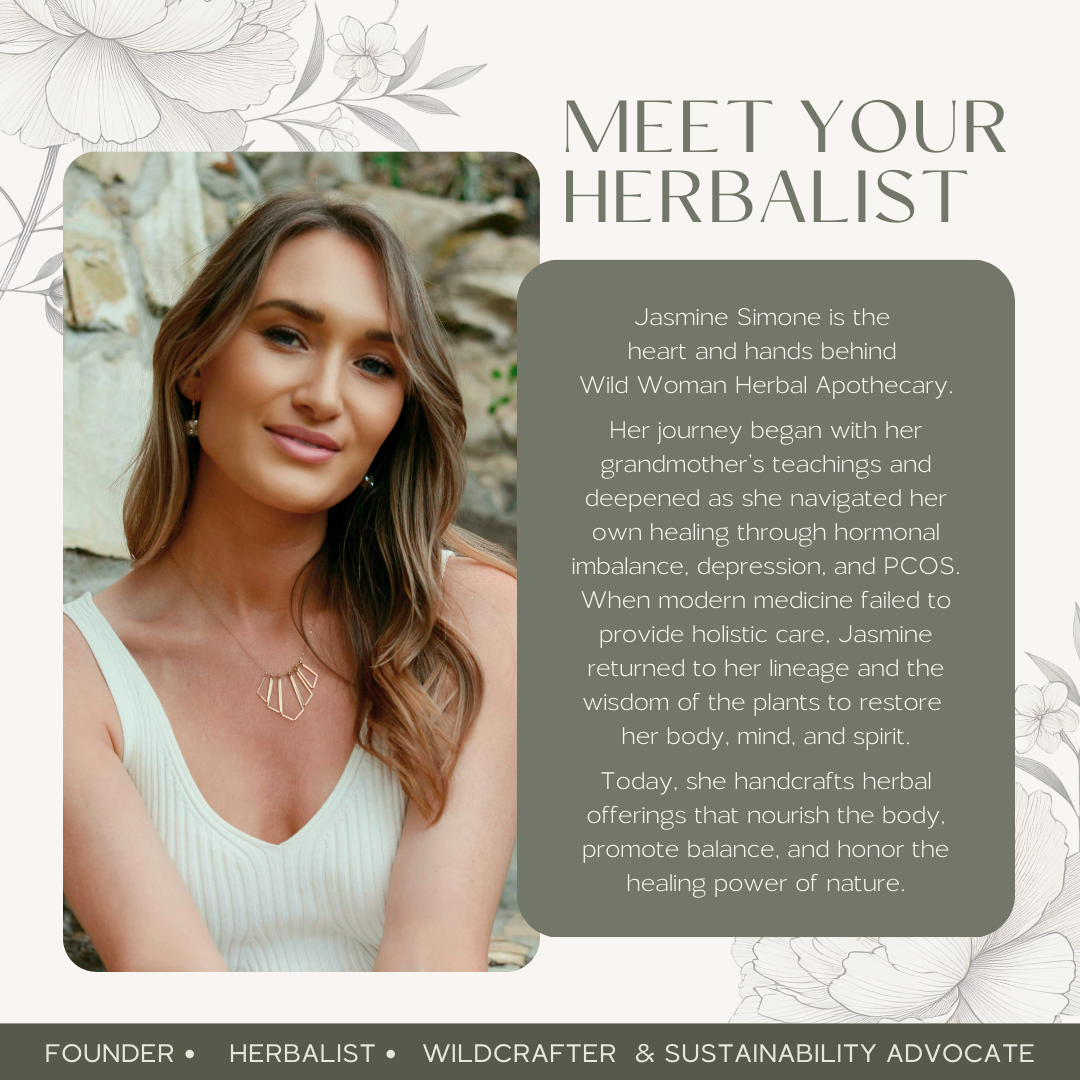
My grandmother didn't call it herbalism. She just knew things — which plants to reach for, which roots to dry, what the earth offered when the body asked. She learned it from her father, who kept a garden in Biloxi and understood plants the way some people understand people. That knowledge passed to her, and quietly, to me.

I didn't fully understand what I'd inherited until my own body started asking questions that medicine couldn't answer. Hormonal chaos, long seasons of depression, the particular exhaustion of feeling disconnected from yourself. I remembered the whisperings. I turned back toward the plants. Everything in this apothecary came from that turning — things I made for myself first, and then for the women in my life who needed the same. I offer them to you the way my grandmother offered what she knew: as a hand extended, as something real.

-Jasmine

Frequently Asked Questions

A Note on Plant Medicine

Plants are powerful — and like any potent thing, they deserve to be used with care and knowledge. These formulas are crafted with intention, but they are not a substitute for medical guidance. Before beginning a new herbal practice, we encourage you to speak with your healthcare provider, especially if you are pregnant, nursing, trying to conceive, managing a health condition, or taking prescription medication. Wild Woman products are not intended to diagnose, treat, cure, or prevent any disease.


These statements have not been evaluated by the Food and Drug Administration. This product is not intended to diagnose, treat, cure, or prevent any disease.

Wild Woman products are crafted to support a slow, intentional wellness practice, not to replace professional medical care. Please consult your healthcare provider before beginning any new herbal practice, especially if you are pregnant, breastfeeding, taking medication, or managing a health condition.

Read our full Wellness Disclaimer →


WARNING: This product may contain chemicals known to the State of California to cause cancer, birth defects, or other reproductive harm.

For more information, visit www.P65Warnings.ca.gov.